MONEY & FINANCIAL STABILITY · 8 min read
10 SMART WAYS TO LOWER YOUR ENERGY COSTS
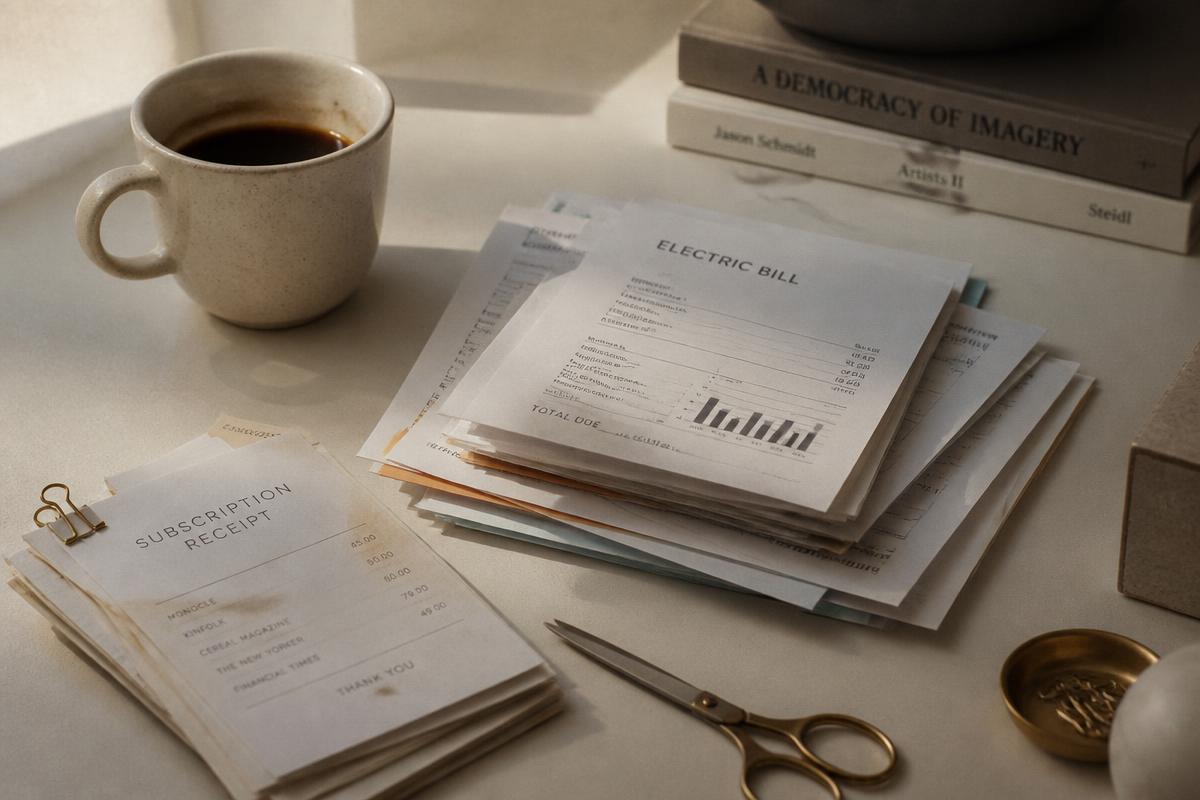
Energy is one of the few fixed costs you still have real influence over. Partly through your contract, partly through your habits.
For many households energy is one of the largest fixed costs, and at the same time one of the few you can genuinely change. Part of it sits in your contract, part in your home and a large part in habits you barely notice anymore.
This article makes no promises about amounts. What you save depends on your home, your household, your contract and your usage. What you get here is an order of operations: first look at what you pay, then at what you use, then at how you use it.
Take it calmly. A lower energy bill rarely comes from one big sacrifice, but from a series of small decisions that repeat every month. For a wider look at your spending, read 30 ways to save money and live better. If your whole money picture feels unclear, start with how to get your finances back on track.
1. CHECK WHETHER YOUR CURRENT ENERGY CONTRACT STILL FITS
Most people do not know exactly what contract they have. Fixed or variable, when it ends, which rate applies and how high the standing charge is. Yet that is the basis of your bill.
Find your last annual statement and your current terms. Write down the rate for electricity and gas, the fixed supply costs and the end date. Only once you know those four things can you judge whether your contract still makes sense.
A contract that was good a few years ago does not have to be good now. Your usage changes when you move in with someone, start working from home, add solar panels or move somewhere smaller.
- Do you have a fixed or variable rate, and until when?
- Are you still inside a contract period with exit fees?
- Does your monthly amount still match your actual usage?
- Are you paying for extra services you do not use?
2. COMPARE ENERGY CONTRACTS AND RATES
Once you know what you pay now, you can compare honestly. Do not look only at the bare rate per kilowatt hour or cubic metre, but also at fixed supply costs, contract length and welcome discounts that only apply for one year.
Comparing does not mean you have to switch. Sometimes the outcome is that you are fine where you are, and that is peace of mind too. The point is knowing instead of guessing.
Weigh certainty against flexibility. A fixed contract gives predictable monthly costs, a variable one moves with the market. Which fits depends on how much fluctuation your budget can absorb.
Want to know whether your current energy contract still fits? Compare your options via Gaslicht.com.
- Compare using your own annual usage, not standard assumptions.
- Add the standing charge to the rate before drawing conclusions.
- Check whether a welcome discount is one-off or structural.
- Look at service and billing quality too, not only at price.
Some links on this page may be affiliate links. If you use one, we may earn a small commission at no additional cost to you. Not every link is an affiliate link, and we never take gambling or betting partnerships. Read the full disclosure
3. LOOK AT YOUR ACTUAL ENERGY USAGE
Your monthly amount is an estimate. Your usage is the reality. As long as you do not put the two side by side, you do not know whether you pay too much or too little.
With a smart meter you can usually see daily or monthly usage in your supplier's app or portal. No smart meter? Write down your meter readings once a week. After a month you have a pattern instead of a feeling.
Then look for outliers. A cold week explains a spike in gas. A spike in electricity without a clear cause is a hint that something uses more than you think.
- Compare this year with last year, not with other people's averages.
- Split electricity and gas: they have different causes and fixes.
- Adjust your monthly amount if it is structurally too low, so you do not build up a bill.
4. REDUCE STANDBY DRAIN
Standby drain is electricity leaking away while you do nothing. Devices on standby, chargers left in sockets, a second fridge in the shed, an old set-top box running day and night.
Individually it is small. Together it runs all year. The nice part is that you give up almost no comfort here.
Walk through your home at a moment when you use nothing and see which lights are still on. That list is your starting point.
- Use switched power strips for TV, audio and your desk.
- Unplug chargers when they are not charging.
- Switch devices fully off instead of leaving them on standby.
- Ask yourself whether that second fridge or freezer is really needed.
5. USE APPLIANCES MORE SMARTLY
Not every appliance costs the same. The big users are usually the ones that make heat or cold: tumble dryer, oven, kettle, fridge, freezer and boiler.
Using them smartly rarely means going without. More often it means the right setting, the right moment and the right quantity.
Maintenance counts as well. A fridge placed in a warm spot or a freezer full of ice works harder than it needs to.
- Cook with a lid on the pan and boil only the water you need.
- Fill the dishwasher properly and use the eco programme, which takes longer but uses less.
- Keep the fridge at the recommended temperature and defrost the freezer when ice builds up.
- Do not place fridge or freezer next to the oven or in direct sun.
6. MIND YOUR HEATING AND TEMPERATURE
In most homes heating is the largest gas cost. Small changes in temperature and timing have more effect here than anywhere else.
This is not about sitting in the cold. It is about not heating what you do not use. One degree lower in the living room, no heating in rooms you never enter and turning down earlier than you are used to.
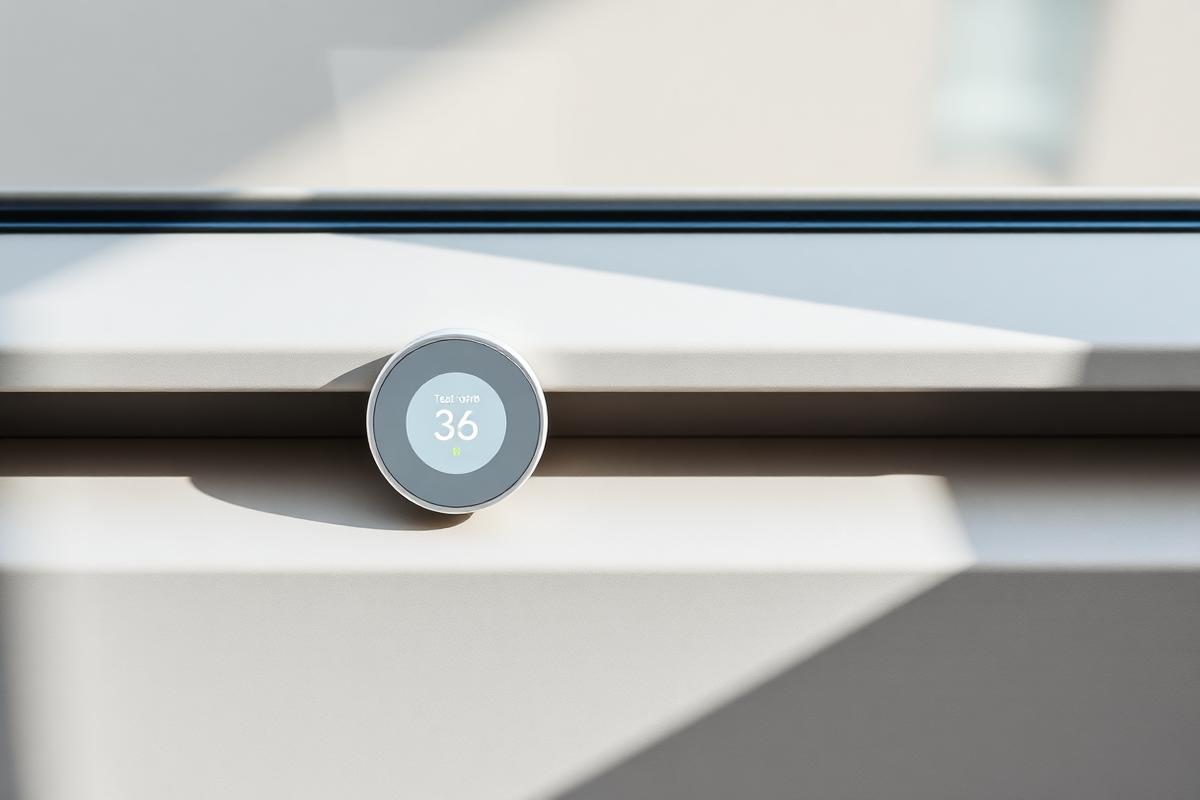
A well set thermostat does a lot of the work. Lower it at night and while you are out, and let it warm up gradually instead of jumping to a high setting.
- Turn the thermostat down one degree and see whether you adjust.
- Heat bedrooms and spare rooms only when you use them.
- Bleed radiators if they stay cold at the top.
- Do not block radiators with furniture or curtains.
7. USE LIGHTING DELIBERATELY
Lighting is usually not your biggest cost, but it is your most visible habit. And habits you can see are the easiest ones to change.
LED bulbs clearly use less than old halogen or incandescent bulbs and last longer. You do not have to replace everything at once: swap them as they fail and start with the lights that burn longest.
Beyond that it is simply switching off lights in empty rooms and using daylight during the day.
- Replace the longest-burning bulbs with LED first.
- Use lower brightness in rooms where you only relax.
- Consider a timer for outdoor lighting.
8. WASH AND DRY MORE SMARTLY
Laundry costs energy in two ways: heating water and drying fabric. The tumble dryer in particular is a heavy user.
Washing at a lower temperature is often fine for everyday laundry. For heavily soiled items or specific hygiene needs you simply pick a hotter programme. It is about the default choice, not a rule without exceptions.
Air drying on a rack or line is the simplest saving there is. Just make sure the room is ventilated so you do not keep the moisture indoors.
- Wash at 30 or 40 degrees where you can.
- Run full drums instead of half ones.
- Let the machine spin properly before anything goes in the dryer.
- Air dry as much as possible and ventilate that space.
9. LOOK AT INSULATION AND DRAUGHTS
Heat that leaks out of your home has to be produced again. That is why sealing draughts is often more effective than heating harder.
Not everything needs a big investment. Draught strips, radiator foil, a letterbox brush and thick curtains are small fixes you can do yourself. Bigger steps such as cavity wall, floor or roof insulation cost more and usually need a professional.
Renting? Do the small things yourself and put larger insulation questions to your landlord. Put it in writing, including what you have already done.
- On cold days, feel along doors, windows and the letterbox for draughts.
- Fit draught strips and close doors to rooms you do not heat.
- Close curtains as soon as it gets dark.
- List larger insulation steps with their costs so you can plan them instead of postponing.
10. MAKE SAVING ENERGY A STANDING HABIT
Going through everything once creates a dip in your usage. A lasting lower bill only appears when it becomes part of your routine.
Put two moments in your calendar: once a month look at your meter readings or usage graph, and once a year compare your energy contract around its end date. That is enough.
It helps to make progress visible. When you see your usage drop, the step from habit to conviction is small. And that is what financial stability is about: not one hard intervention, but steady steering.
- Monthly: check your usage and your monthly amount.
- Yearly: compare your contract before it ends.
- Each season: review thermostat settings and draughts.
- Set aside what you save, so the money goes somewhere.
MORE ROOM IN YOUR MONTH
Lower energy costs are a start. Use the free tools to map your fixed costs and spending pattern, so you can see where the rest of your room is hiding.
Some links on this page may be affiliate links. If you use one, we may earn a small commission at no additional cost to you. Not every link is an affiliate link, and we never take gambling or betting partnerships. Read the full disclosure
Transparency: some links on The Recovery Diary are affiliate links. That means we may receive a commission when you use a service or product through such a link. This does not influence our editorial choices. This article is general information and not financial advice.
NEXT STEP
Start small: find your current energy contract today and note the rate, standing charge and end date.
DO THE SPENDING CHECKCONTINUE FROM HERE
Two natural next steps, whichever chapter you are working on.